
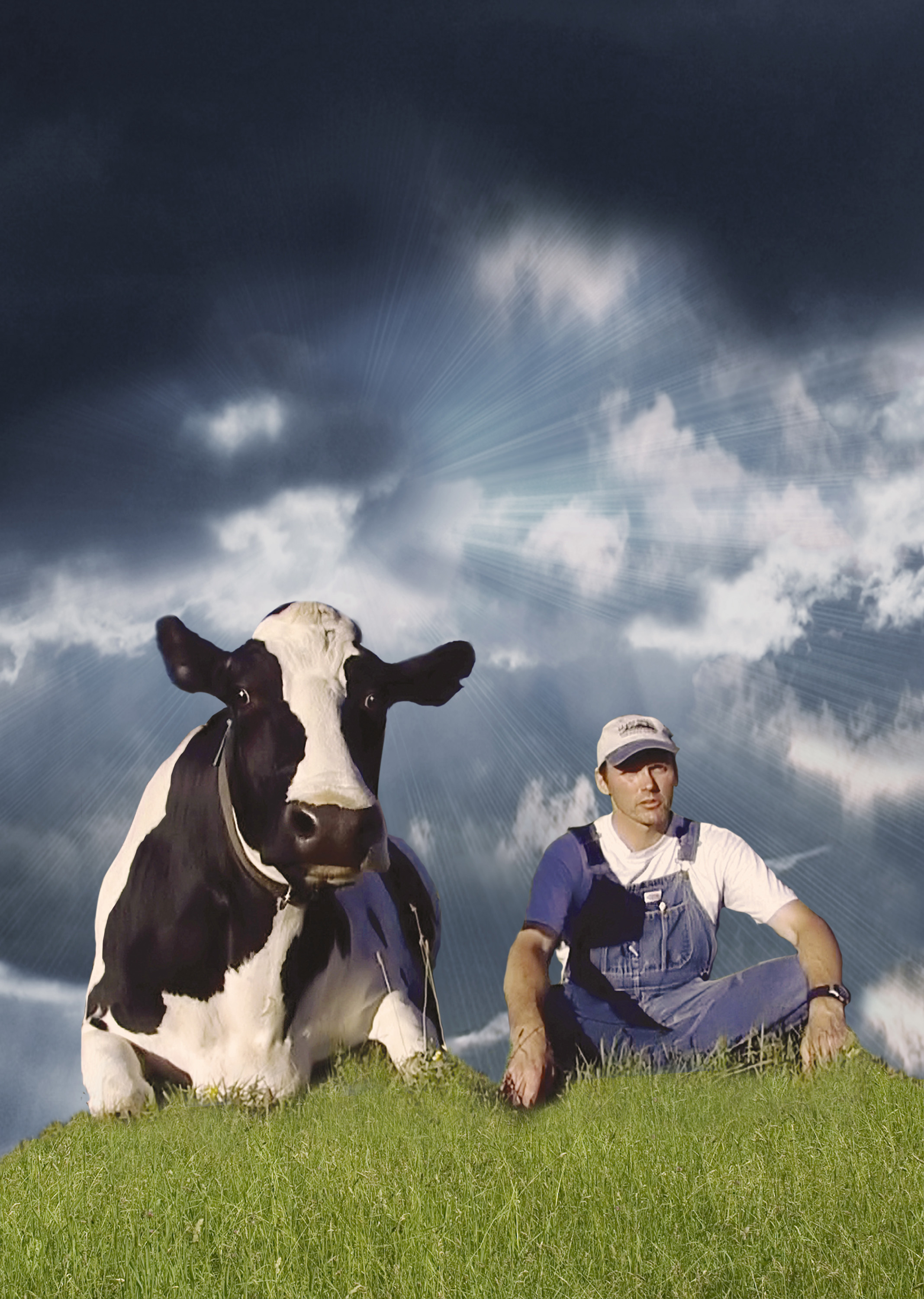
18th Annual Environmental Film Fest

© Tribe of Heart

From sustainable food culture to colony collapse disorder to school lunches, the vital connection between food and the environment is a major theme of the 18th annual Environmental Film Festival, March 16 through 28.

Film buffs and environmentally aware citizens will have the opportunity to see 155 documentary, feature, animated, archival, experimental, and children’s films that provide fresh, thought-provoking perspectives on the environmental issues facing our planet.

The festival takes place at 56 venues throughout the city, including museums, embassies, libraries, universities, and local theaters–and most of the screenings are free.

Local Highlights

The Green House: Design It. Build It. Live It., is a documentary that chronicles the building and design of the first carbon-neutral house in the Washington, D.C. area. A discussion with the filmmakers, builder, and designers featured in the film follows the screening on Wednesday, March 17, 7:00 p.m. at E Street Cinema.

Who Killed Crassostrea Virginica: The Fall and Rise of Chesapeake Bay Oysters documents the decline of a Chesapeake Bay oyster fishery devastated by the economy of traditional tidewater communities in Maryland and Virginia. This documentary re-evaluates the usual suspects – overfishing, pollution, disease, and mismanagement – in light of fresh findings from science labs, the bottom of the Bay, and long-forgotten historical archives. Sunday March 21, 1:30 at the Carnegie Institution for Science.

Lunch is a short documentary that takes a close look at the nation’s school-food programs through the meals offered by Balitmore’s public schools. The filmmaker not only highlights the links between food and academics and between the current food system and political decisions, but also focuses on initiatives aimed at giving our children healthier lunches in school. Monday March 22 at 7 p.m., American University, Center for Environmental Filmmaking & Earth Day Network.

Global Highlights

The Washington, D.C. premiere of GasLand, an award-winner from the 2010 Sundance Film Festival, will screen on the festival’s opening night with filmmaker Josh Fox in attendance. A special sneak preview of Turtle: The Incredible Journey traces the extraordinary lifetime journey of the loggerhead turtle as it navigates the globe. The D.C. premiere of Colony documents the crisis of colony collapse disorder within the beekeeping community.

What’s On Your Plate? focuses on food sources and Fresh on the growth of a sustainable food culture in America, while Seed Hunter spotlights the search for seed genes able to withstand global warming. Dirt! The Movie and Soil in Good Heart highlight the key role of topsoil in creating nourishing food.

The Music Tree, which explores the future of the threatened brazilwood tree, a vital in the manufacturing of fine violin bows since the age of Mozart, will receive the Festival’s first annual Polly Krakora Award for artistry in film at its Washington, D.C. premiere with Brazilian filmmaker Otavio Juliano.

The Environmental Film Festival has become the leading showcase for environmental films in the United States. There will be cinematic work from 31 countries and 66 Washington, D.C., United States and world premieres. Fifty-six filmmakers and 94 special guests will discuss their work at the festival.

Back to Your Roots

On Saturday, February 20th, DC’s Field to Fork Network, the America the Beautiful Fund, local community organizations, and members of DC’s urban gardening community will gather for the third annual Rooting DC urban gardening forum.

This year’s theme focuses on food production, distribution, preparation, and preservation. The full schedule is available here.

When: Saturday February 20th, 9:30-4 pm

Where: 801 K Street NW (Near the Mt. Vernon Sq./Convention Center and Gallery Place metro stops)

This day-long event is free and open to the public and will include panel discussions, workshops, and talks. Learn how to grown your own food and compost, watch cooking demonstrations, find out about farmer’s markets and CSAs, and discover the world of urban agriculture.

Pre-registration is full but walk-up attendees will be admitted at 9:50am in order of arrival. Please call 202-638-1649 with any questions.

Event: The Green Workplace

On Thursday, February 17 at 6 pm, Leigh Stringer will be speaking about her new book The Green Workplace at the American Institute of Architects, Washington Chapter at 1777 Church Street, NW.

The book targets companies, government agencies and NGOs, laying out hundreds of strategies for greening the workplace to help the environment and the bottom line.

Leigh will share best practices from interviews with large and small organizations as well as ways to encourage green human behavior in the workplace through lessons from behavioral science. Register online or call (314) 935-5212 to RSVP.

Leigh Stringer is a LEED Accredited Professional and a vice president at HOK, a global architectural firm and industry leader in sustainability. She lives in Washington DC.

Green Real Estate Heats Up

The mainstream real estate market is still iffy, but the green real estate market is gaining momentum. We talked with Adam Gallagos of Arbour Realty — Northern Virginia’s first green real estate company — to find out about the local green real estate market, how homeowners can reduce their carbon footprint, and the coolest eco-friendly home he’s ever seen.

Have you seen a change in demand for green homes over the past few years?

Yes–we are seeing a steady increase.  The problem is that there is more demand than supply.  We have had to find innovative ways to satisfy this demand.  There are a couple mortgage programs that allow home buyers to borrow more than the home is being sold for so that they can make energy-efficient improvements on their own.  We are also creating relationships with builders that are building new green homes or are able to make quality green renovations

Can you tell us a little about Arbour Realty and your mission?

We are an Arlington-based full service residential real estate brokerage serving all of Northern Virginia, DC and parts of Maryland.  Arbour Realty lives and breathes a mission to create consistently high levels of customer service with minimal impact on the environment.

What makes your company green?

From a high-level, it’s our low environmental impact and our team of green certified Realtors. Our office is located close to the Ballston Metro, we use clean power from Clean Currents for daily operations, and we have completely eliminated paper from the real estate contract. We also  provide every home buyer with an eco-home assessment or home energy audit and through our relationship with The Arbor Day Foundation, we plant trees in honor of every client we work with in an effort to offset the driving we do.

Has there been an increase in the number of green-built homes lately?

Yes. We are slowly seeing more EnergyStar, EarthCraft, and LEED certified homes built around the DC area.  No longer do granite, stainless steel, and hardwood floors make a home stand out from the pack.  Builders that want to make their homes stand out in a positive way are looking to green and high performance building practices as a way of accomplishing this.  As we are able to collect more data about how green homes are performing on the market, I expect that the numbers will encourage more builders to go green.

What’s the coolest/most unique green home feature you’ve ever seen?

I had the opportunity to tour a home being built in Falls Church that is constructed of earth bricks.  They were able to compress soil taken from the construction site to create bricks.  These bricks were then used to for the walls of the home. The cost is relatively inexpensive. Transportation of of these bricks was obviously eliminated. The bricks do such a good job of retaining indoor air temperatures that the home did not even require an air-conditioning system.

What are the three simple ways that homeowners can be more green/reduce their carbon footprint?

1. Buy or build a rain barrel to collect water as it comes down the drain spout.

2. Use green cleaning products that are free from toxins.

3. Consider higher efficiency options and the long-term payback when replacing heating and air conditioning systems, hot water heater, insulation, windows, and doors.

What eco-friendly upgrades have the biggest bang for the buck in terms of increasing property value?

My recommendation is to start with a home energy audit.  A good auditor is going to be able to identify the items in your house that will provide the biggest bang for the buck.  Knowledgeable, green-savvy home buyers want to see a history of utility bills, they want to know what you have done to create a healthy indoor living environment and see that you have used finishes that are light on natural resources and toxins.

Do you live in a green home? And if so, what are the features?

My home is very efficient, but I wouldn’t go so far as to say that it is green.  It was built in 2006 so by default it utilizes materials and techniques that are more efficient than what would have been used 15+ years ago.  Here’s a few of the things we’ve done:

  • Installed soy-based spray foam insulation to seal the attic walls. This keep the attic temperature within about 10 degrees of what it is in the rest of the home.
  • Replaced carpet in the bedrooms with locally harvested wood flooring. With hard surfaces on the main and upper-level we don’t have to worry about the dust and germs that carpet tends to harbor.
  • Created a compost bin — we get free fertilizer for our garden and reduce what we are sending to the landfills.
  • Use a rain barrel to collect water for our garden and lawn.  Both prefer the non-chemically treated water to what we would get out of the spigot.
  • Put plants in every room of the house – this helps naturally clean the air that we breathe when inside the home.
  • Installed a recycled glass backsplash made out of recycled glass bottles.

Get Ready for Earth Hour

Can turning off the lights for one hour across the world send a message about climate change? The World Wildlife Fund thinks so.

During Earth Hour, hundreds of millions of people around the world will come together to call for action on climate change by doing something quite simple—turning off their lights for one hour.

Join the movement on Saturday, March 27 from 8:30 p.m– 9:30 p.m by turning off your non-essential lighting. Sign up online and be counted as part of Earth Hour 2010. Gallaudet University, The National Cathedral, the NAACP, and the Four Seasons have already agreed to participate in this global call for action on climate change. Will you join them?